
How to Check for a Warrant in Gibson County
Gibson County publishes no single warrant lookup. The sheriff runs no public search tool, and the courts post no live warrant database either. So start with the court named on the citation or summons. General Sessions handles most county misdemeanor and traffic files, Circuit Court holds the felony cases, and a city citation goes to that municipal clerk. The Gibson County Sheriff can answer service questions, though its staff do not hold every court file. Before you call, gather the case number and the last hearing date. Ask whether the paper is an arrest warrant, an FTA, a capias, an attachment, or just a next court date, and which office keeps the official entry. A blank result in a state or private database clears nothing at the local courthouse.
- Read the court and county on the paper, then call that clerk. For a county criminal or traffic matter, General Sessions is a practical first stop.
- For a felony file, call the Circuit Court Clerk and ask whether the case moved from Sessions after indictment or bind-over.
- For a city ticket, call that city's municipal court. Do not assume the Sheriff's page includes city court process.
- If a record request is needed, ask the office for its own Tennessee Public Records Act process and request existing records with a date range.
- If the status may affect a court appearance or release, speak with a Tennessee attorney and ask the issuing court what action is available.
Gibson County Has No Public List
Gibson County publishes no public warrant list. The Sheriff's page gives a phone, an address, and office hours, but no warrant roster, no most-wanted page, and no lookup box. The court pages describe their work without a live warrant search either. That gap matters. One agency's site cannot answer for every court, and it cannot tell you whether a fresh return has reached the clerk. For case status, ask the clerk at the court named on the paperwork. Neither a payment vendor nor a name-based history check substitutes for that answer. Use the Gibson County Sheriff's contact page to ask what its staff may release about an outstanding warrant.
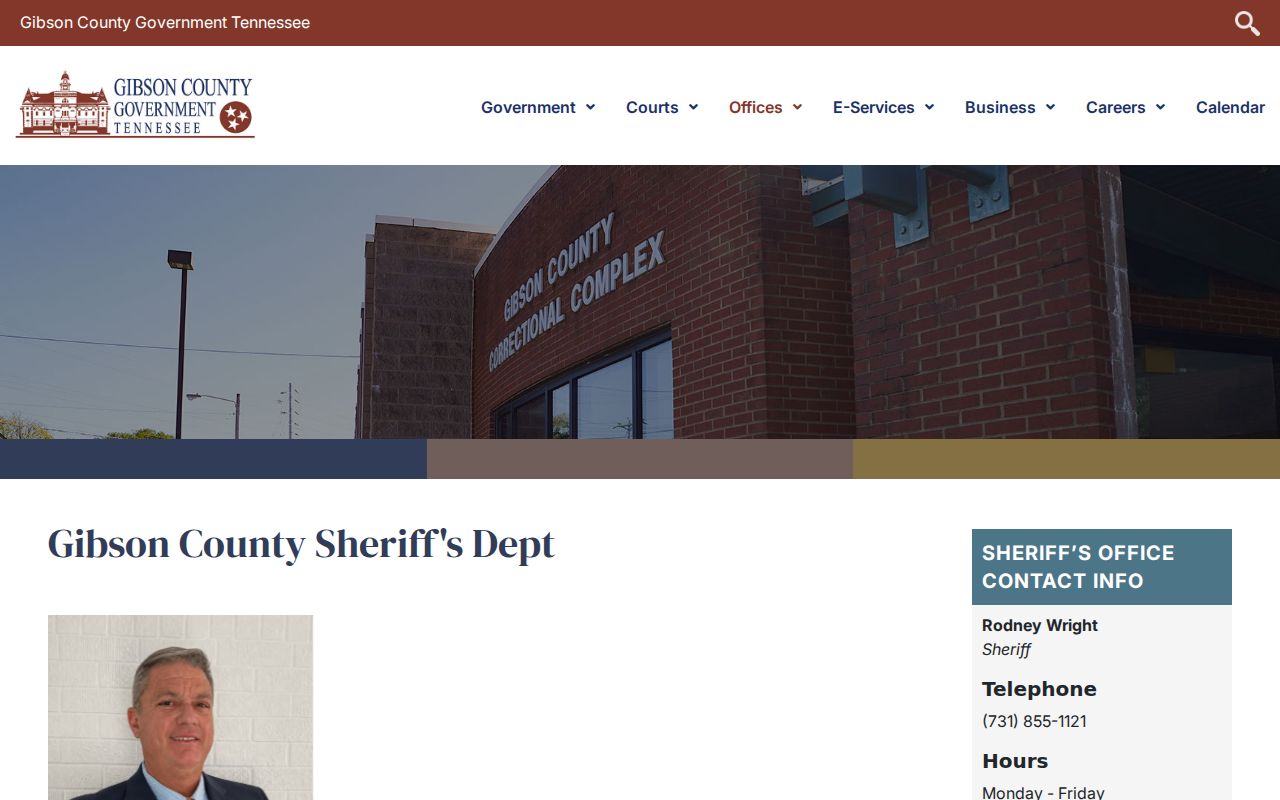
The page is a contact source, not a searchable warrant list.
Types of Warrants in Gibson County
Gibson County courts handle an arrest, a missed appearance, and a search through different process. General Sessions is the county's first-resort court and expressly lists criminal and search warrants, traffic court, and bond setting. Rule 4 covers an arrest warrant or criminal summons after the required probable-cause step. Rule 9 uses capias for certain indictment and summons situations. A city citation follows its own court route.
| Warrant Type | How It Arises | Who Issues It |
|---|---|---|
| Arrest warrant | Complaint and probable-cause review | Issuing judge or magistrate |
| Bench warrant or attachment | Missed court date or failure to comply | Court handling the case |
| Search warrant | Request to search under Rule 41 | Authorized judge or magistrate |
| Capias | Rule 9 process after indictment or failure to answer a summons | Court handling the proceeding |
Gibson County Process Terms
Clerks use more than one term for a missed court obligation. Tennessee Rule 9 names a capias in defined criminal proceedings, and the initial-appearance form has boxes for an attachment and an arrest warrant too. Gibson County's public pages do not define one citywide term for every municipal failure to appear.
- Capias
- A court process named in Rule 9, including some failures to answer a criminal summons.
- Attachment
- A process label on the Tennessee initial-appearance form. Ask the local clerk how it applies to the case.
- Recall or quash
- A court action that changes a warrant's status. A payment receipt alone does not prove it happened.
- Return
- The serving officer's report about service. It may not show the later case outcome.
What a Gibson County Warrant Record Shows
A public process record can point to a case without showing every protected detail. The Tennessee initial-appearance form lists fields such as the case number, court, FTA, process type, bond, judge, and date. That blank form shows possible fields only. It cannot reveal whether Gibson County has a live case. The county publishes no warrant number format, so use the court's case number when asking the clerk to pull a file.
| Case number | Case or docket number, used to route a question to the right file. |
|---|---|
| Process | Arrest warrant, capias, attachment, or summons, as entered by the court. |
| Issuing court | General Sessions, Circuit, or the named municipal court. |
| Charge or citation | The case category tied to the process, subject to access limits. |
| Bond and date | Any bond condition and the appearance date recorded by the court. |
| Service or recall | Return, service, recall, quash, or satisfaction entry when available. |
Two Gibson County Court Routes
General Sessions has separate Trenton and Humboldt contact routes. Circuit Court shares the Justice Building address with the Trenton Sessions office, but the Circuit Clerk handles a different case stage. A paper's court caption beats choosing a Gibson County office by building alone.
| Office | Use this route for | Public contact |
|---|---|---|
| General Sessions | Many criminal, traffic, bond, and warrant-origin questions | Trenton and Humboldt offices |
| Circuit Court Clerk | Felony and Circuit case files after bind-over or indictment | Cindy Flowers, 731-855-7615 |
Call the office shown on the record first. The General Sessions page lists the Gibson County court's warrant and bond roles.
Who Issues and Serves Gibson County Warrants
Courts issue process; a Gibson County sheriff's deputy or city officer may serve it. General Sessions publicly lists criminal and search warrants and bond setting. Circuit Court is the felony route. Municipal courts handle city ordinance and traffic matters. The serving office may report service, but only the issuing court controls a recall or other case action. The county has no constable warrant channel.
Gibson County Sheriff's Department
Correctional Complex, 401 N College St
Trenton, TN 38382
Monday-Friday, 8:00 a.m.-4:30 p.m.
(731) 855-1121
Gibson County Sheriff's List Gap
The Gibson County Sheriff's page posts no active warrant list, no warrant-specific email, no service roster, and no amnesty notice. It remains a useful official contact when your question concerns service or a record the department holds. Call before visiting. The page does not say whether staff will confirm warrant status by phone or accept a voluntary surrender. The county's public pages also give no active-warrant count. See the official Gibson County Sheriff page for its current public contact information.
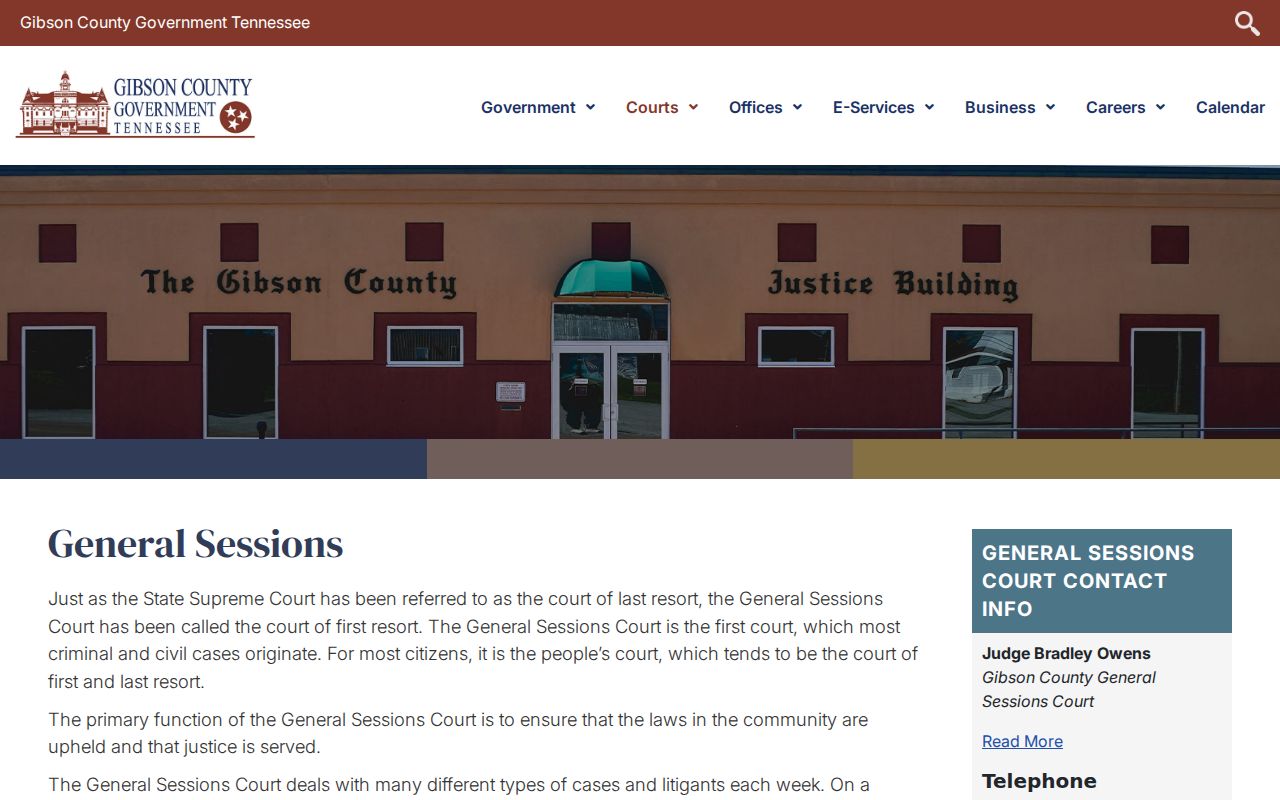
General Sessions is the county's clearest public description of where criminal warrants originate.
What to Do If You Have a Gibson County Warrant
Start by reading the notice closely in Gibson County. It names the issuing court and the process at hand. Then call the clerk and ask real questions: can the warrant status be confirmed by phone, should an attorney contact the court, and is a motion, an appearance, a bond, or a surrender arrangement on the table? Gibson County publishes no universal walk-in or recall procedure, so a routine counter visit should not be assumed to settle things. If a bond is set, ask which office takes payment and what forms it accepts. Get the release paper too. A bond can handle release or appearance conditions without closing the case. Keep your receipt. Later, confirm the case status with the issuing clerk yourself.
Important: Speak with a Tennessee attorney before appearing. The local sources do not promise walk-in surrender, a bond amount, or an immediate recall.
Gibson County FTA License Steps
Miss a traffic date in Gibson County and you face two distinct problems. One is the open court matter. The other is a Tennessee license hold. The Department of Safety wants any applicable FTA satisfied with the court first, with a release sent within 30 days. Past that window, its guidance calls for a court document and lists a reinstatement fee. Neither step tells you whether a Gibson County warrant is still active. Ask the issuing clerk what release or satisfaction paper the court will provide, then follow the Tennessee Department of Safety reinstatement instructions. A court release and a state license update are separate steps, and one does not change the other on its own. The official Safety Support explanation lays out the FTA timing and release requirements.
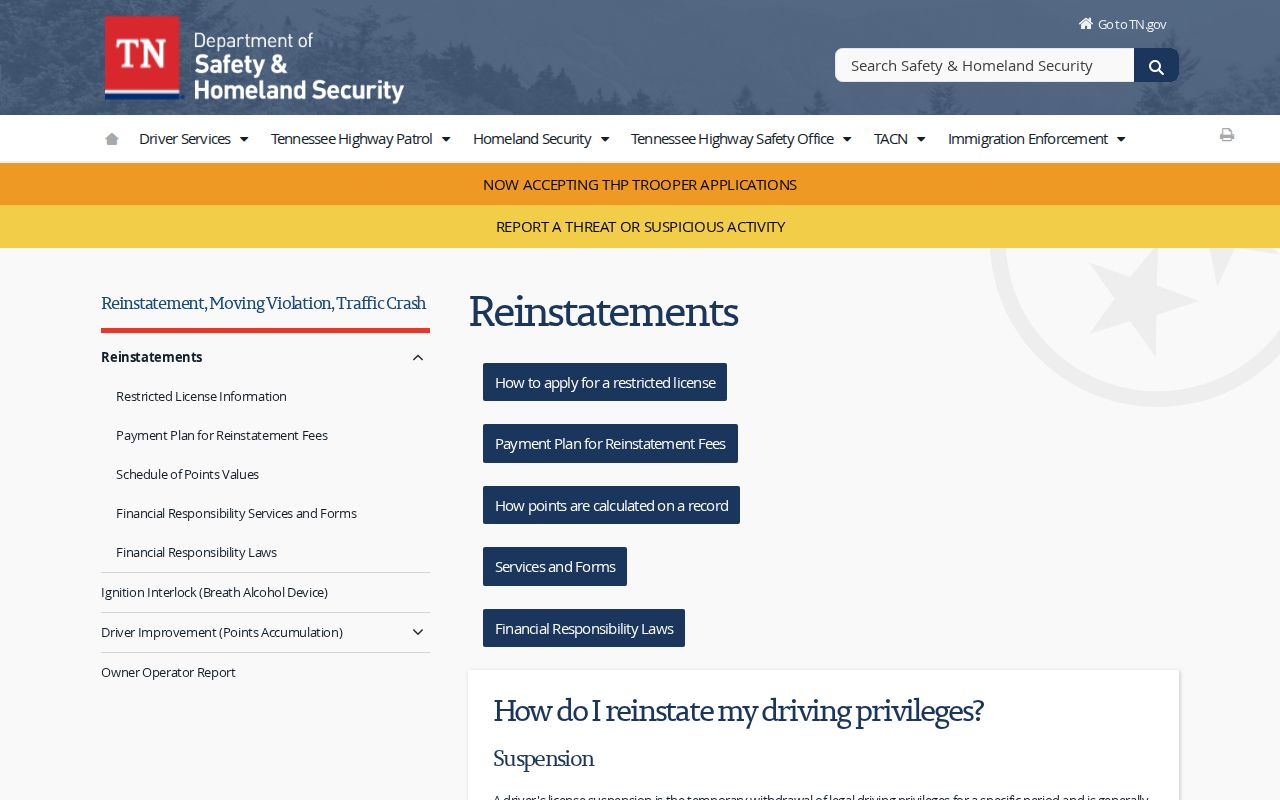
That state guidance covers license compliance only. It says nothing about whether a Gibson County warrant is active.
Public Access to Gibson County Warrant Records
Tennessee's Public Records Act, T.C.A. § 10-7-501 et seq., governs access to records that already exist, subject to exceptions. Tennessee Supreme Court Rule 34 covers court records. A written request should name the office, the record type, and a date range. No office has to build a new warrant database. A Tennessee requester may need to prove citizenship and identity under that office's policy.
Key Rules:
Tennessee Public Records Act, T.C.A. § 10-7-501 et seq. - Requests cover existing public records and must go to the proper office.
Tennessee Supreme Court Rule 34 - Court access has exceptions for sealed or protected records.
Juvenile Rule 114 and T.C.A. § 37-1-153 - Juvenile files have separate confidentiality limits.
Gibson County Request Example
The Chancery Clerk and Master posts a local public-record policy with a request form and a response form. It is a helpful model, but it does not bind the Gibson County Sheriff or every court. Name the office first. Then seek an existing policy, form, docket entry, or process return for a bounded period. The local policy says inspection is free, yet its attached form shows an inspection fee line. Ask the office to confirm the current charge before any copy request. The Gibson Chancery policy and forms show fields for the record description, dates, delivery choice, and response. Do not ask a clerk to build a custom list of every open warrant. A narrow request for existing records is more likely to reach the right desk. The form is an example from the Gibson Chancery office, not a countywide warrant form.
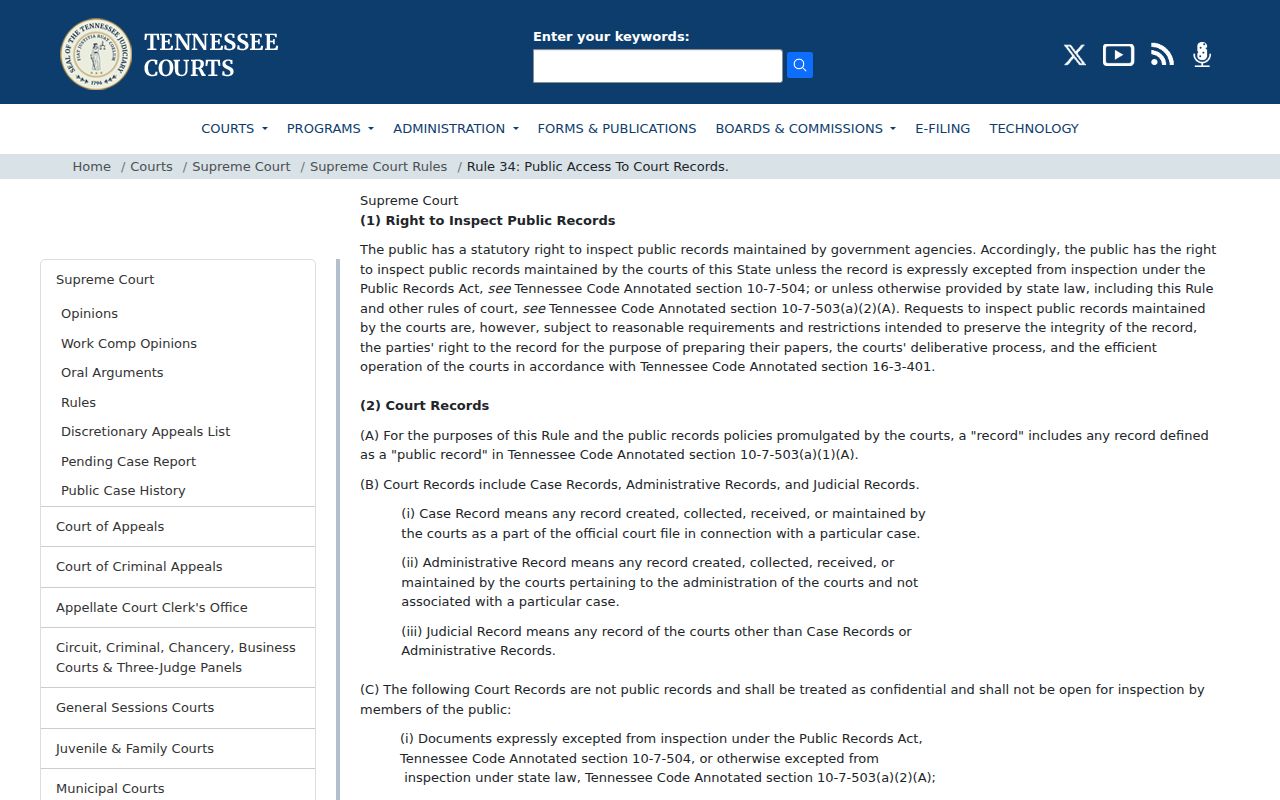
Rule 34 and the Tennessee Public Records Act set related but distinct access routes.
Warrant Records by City in Gibson County
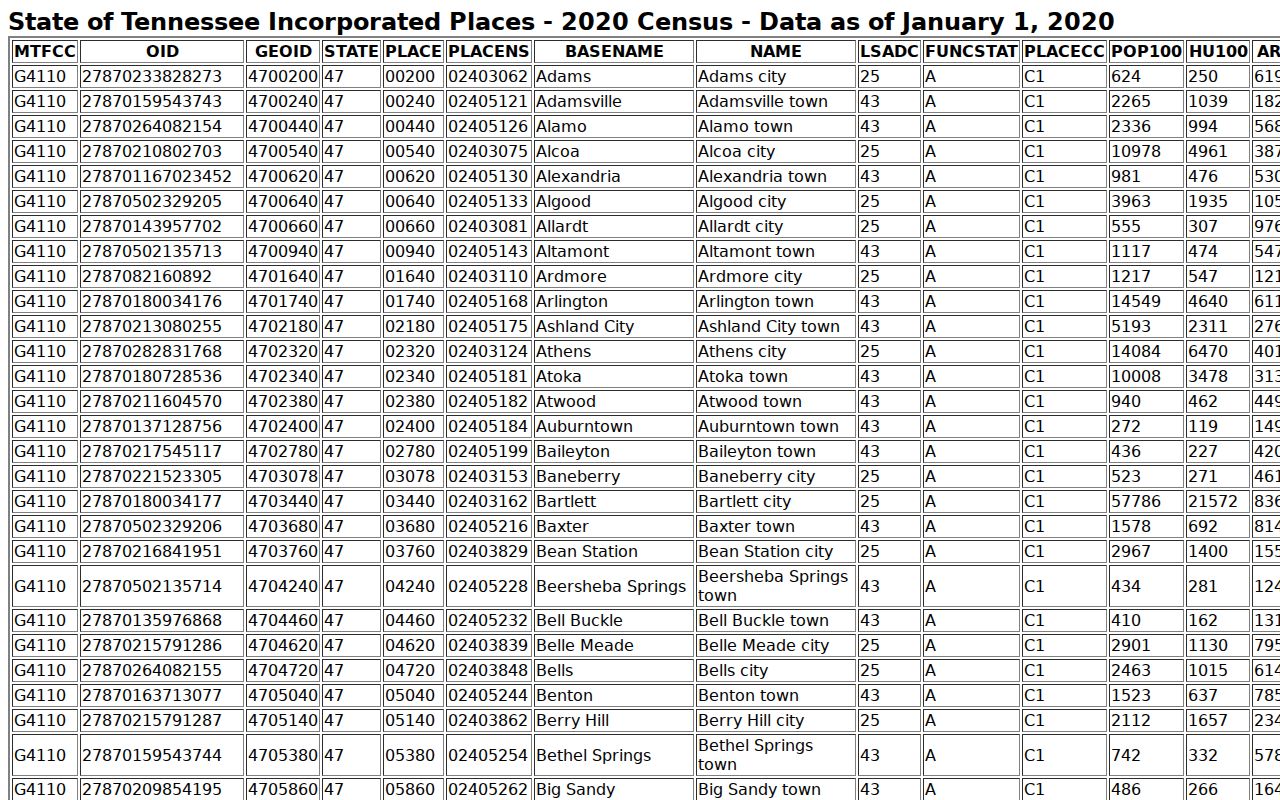
City citations start with the city court named on the paper, not a single county register. Gibson County's five largest incorporated places appear below in 2020 Census population order. Their official pages vary. Some publish court dates or payment routes. None of these city pages offers a public warrant search.
Milan Warrant Records
8,171 residents in 2020; police records form and a separate City Court clerk route.
Humboldt Warrant Records
7,874 residents in 2020; confirm whether the record belongs to Gibson or Madison County.
Trenton Warrant Records
4,240 residents in 2020; City Court and county courthouse contacts are separate.
Dyer Warrant Records
2,308 residents in 2020; its payment page is not a warrant-status lookup.
Rutherford Warrant Records
1,163 residents in 2020; the town and MTAS directories differ on a meeting time.
Gibson County City Court Records
Humboldt straddles a county line, so read the citation before choosing a court. Milan keeps city traffic cases apart from county General Sessions. In Trenton, the city court sits at a different address than the county Justice Building. Those are practical splits. They do not mean one court can search another court's files in Gibson County. The population ranking on this page comes from a Census table; open the 2020 incorporated-place table to see each city's figures.
The city pages explain the distinct local police and court contacts for each place.